Description

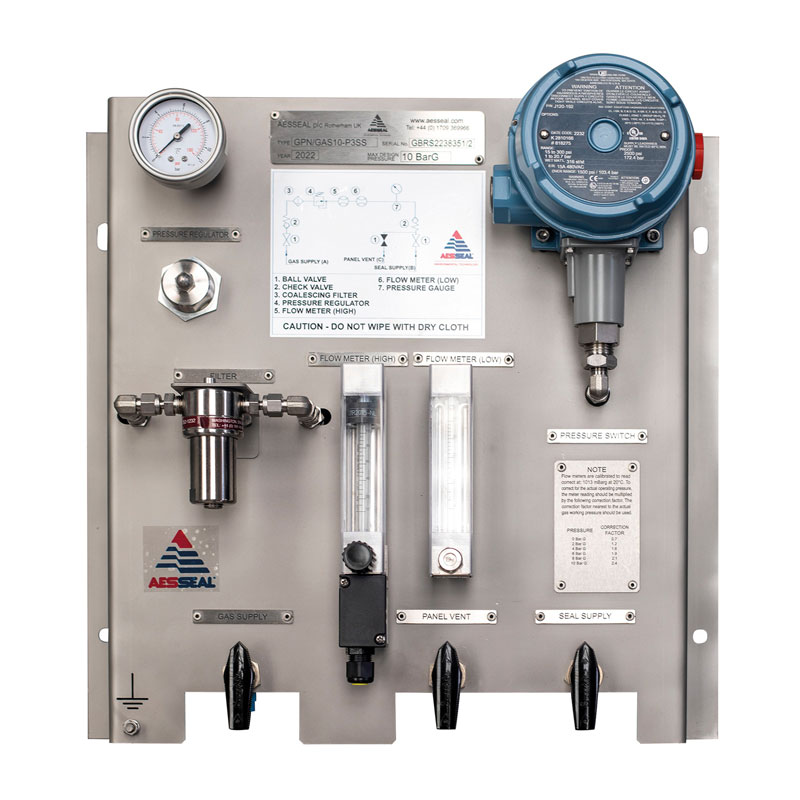
Buffer gas is passed through the containment seal chamber to sweep inner seal leakage away from outer seal to a collection system and / or dilute the leakage.

Features

  1. Used in conjunction with API Plan 75 and/or 76.
  2. Nitrogen provides cooling to seal faces.
  3. Nitrogen blanket reduces the explosion hazard in high vapour pressure liquids.
  4. This plan is used in conjunction with Plan 75 and 76.

Use

  1. For flashing hydrocarbons.

Caution

  1. Always ensure that buffer gas pressure is less than seal chamber pressure.
  2. Set the forward Pressure control valve at minimum 0.4 bar above flare back pressure.
 onload=

YouTube Video Series

AESSEAL® provides the best advice for managing containment seal assets.

A mini series on the dangers of containment seals. We discuss different topics relating to all aspects of containment seals, their application and design.

Containment Seal History video
First Part of our new YouTube Video series, which covers the history of containment seals and how they came to market.
Containment Seal Designs Video
YouTube video series part 2. We review the different designs of containment seals available As we mentioned in the previous video, containment seals can be contacting or non contacting designs.
Perception of a Dual Seal Video
YouTube video series part 3. We discuss the industry and users' perception of whether the Containment Seal is a true dual seal.
Containment Seal Operational Bad Practice
How containment seals have been incorrectly supported. How they need to be supported correctly with the right piping plan and instrumentation.
Containment Seal video 6 cover
We explore all dual seal options and present a case that a pressurised dual is not the most expensive option when considering which dual seal plan to specify.